A useful first conversation
You can begin with an idea, a formula or a product already on the market.
Each starting point needs a different review.

Product concept

Existing formula

Current product

Market reference
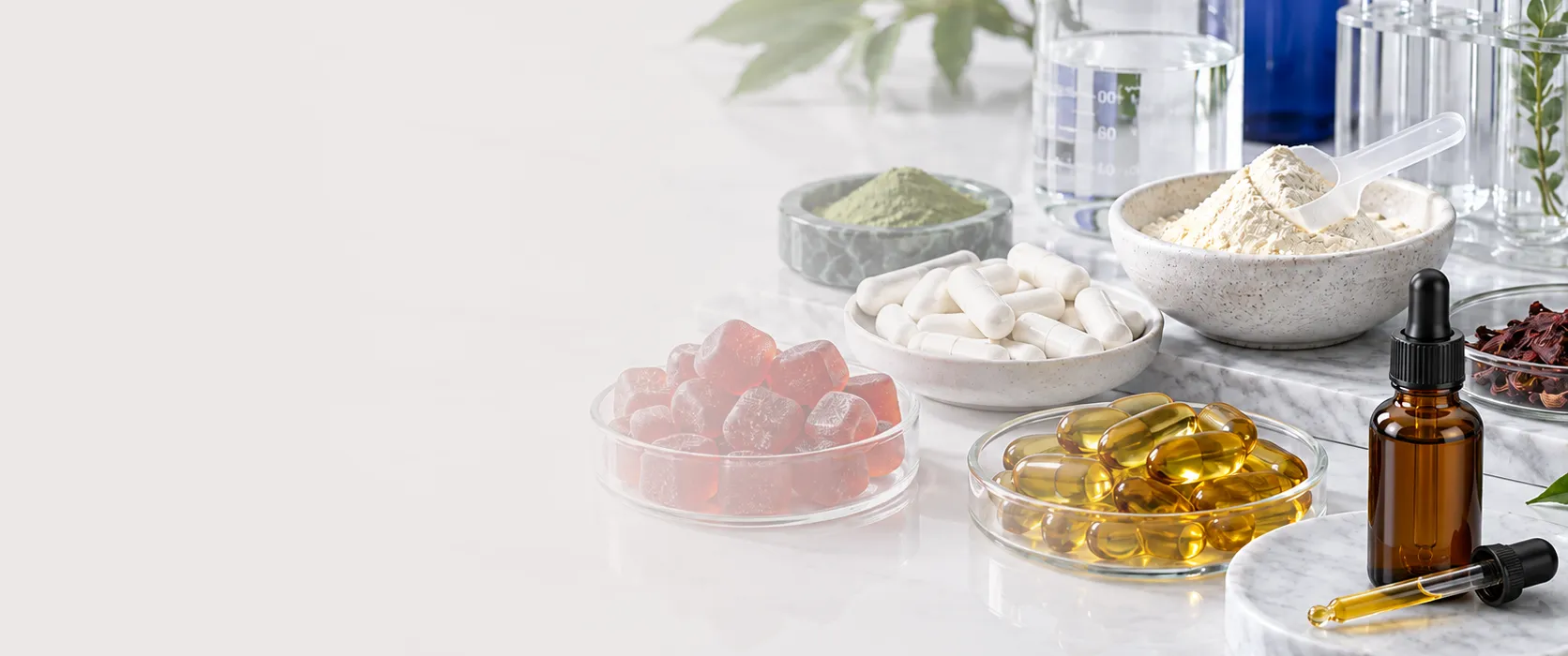
Choose the format that fits your product direction first.
Dosage-form decisions
01 Gummies
Useful when taste and an approachable daily routine matter, but active load and stability need early review.
DISCUSS FIRST
Target dose, gummy count, sugar direction and flavor.
COMMON TRADE-OFF
Consumer experience versus active load per serving.
02 Capsules
A practical choice for many concentrated ingredients when dose, capsule size and daily serving remain acceptable.
DISCUSS FIRST
Ingredient density, capsule material, capsule count and serving size.
COMMON TRADE-OFF
Higher active load versus the number and size of capsules.
03 Softgels
Suited to many oil-based or fat-soluble ingredients where fill compatibility and protection matter.
DISCUSS FIRST
Oil system, fill volume, oxidation risk and shell compatibility.
COMMON TRADE-OFF
Ingredient protection versus sourcing and production complexity.
04 Powders
Useful for larger serving sizes and drink-based routines, with taste, texture and solubility shaping the experience.
DISCUSS FIRST
Serving weight, mixing method, flavor system and packaging format.
COMMON TRADE-OFF
Meaningful ingredient amounts versus taste and pack size.
05 Drops
A flexible liquid format where accurate dosing, taste and ingredient stability need to work together.
DISCUSS FIRST
Liquid base, target dose, solubility, flavor and dropper or pump delivery.
COMMON TRADE-OFF
A compact serving versus solubility, taste and stability limits.
After format selection
Now make sure the formula works in the format you chose.
Once the dosage form is defined, these are the practical questions that should be reviewed before time is spent on a sample that cannot meet the brief.
Can the target dose fit the serving size and chosen format?
What will flavor, texture, color or odor mean for the consumer?
Which ingredients, moisture or processing conditions may create conflicts?
What needs to align across label direction, quantity, packaging and documentation?
Working process
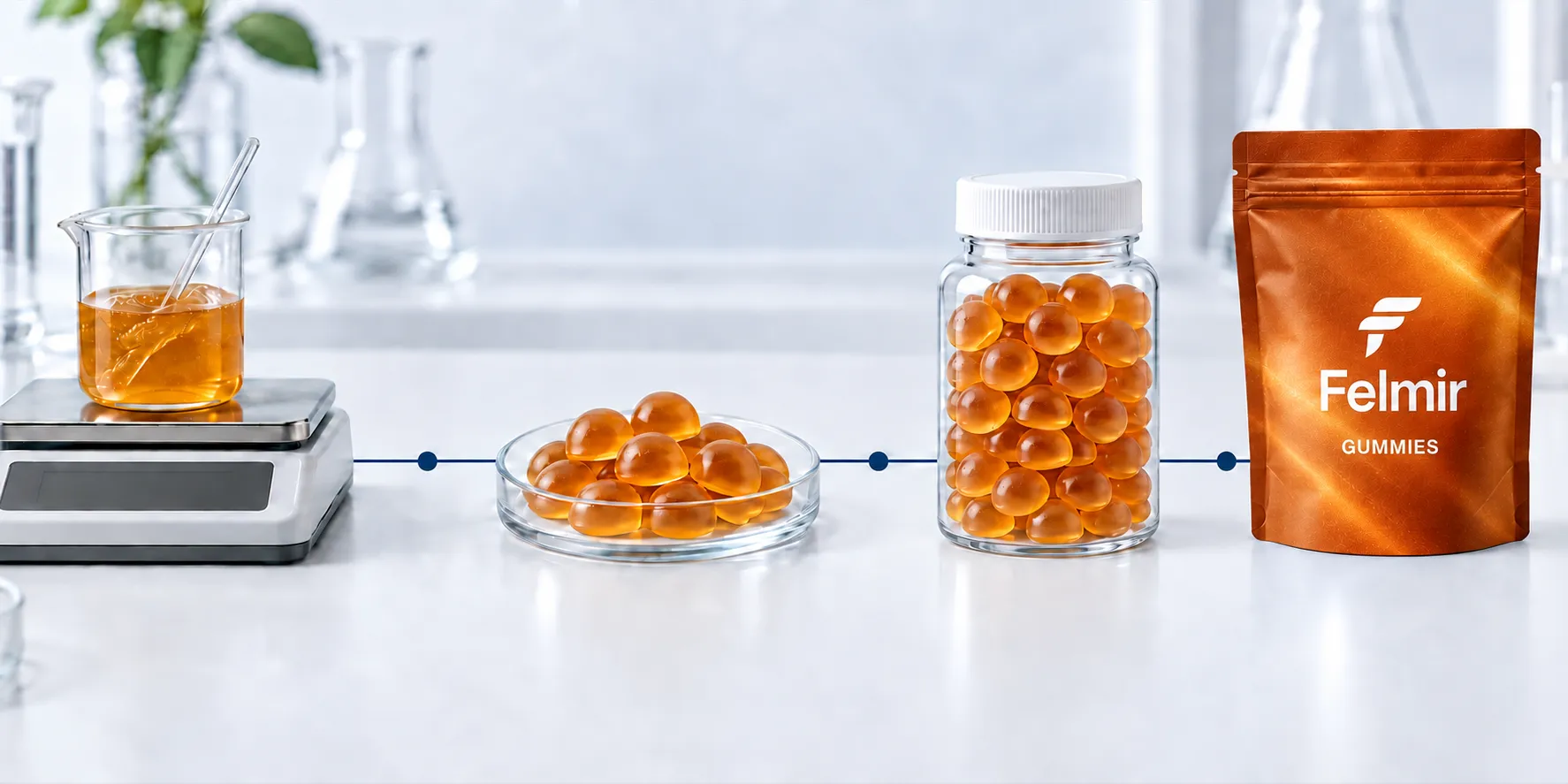
A clear path from requirement confirmation to production.
Each stage should have a decision and an output. Timing is confirmed against the actual project.
Market, customer, format, formula status, quantity and packaging.
Ingredient load, compatibility, format limits and missing information.
A defined product direction, commercial basis and items still to confirm.
A sample built around agreed evaluation points rather than a vague trial.

Structured feedback, agreed revisions and final sample confirmation.

Packaging, production, inspection and applicable project documentation.
Before you submit
Questions that help a buyer decide whether to begin.
Yes. Start with the target market, consumer, dosage form and product goal. The first review should identify which decisions are still needed before sampling.
An existing formula can be reviewed against the intended dosage form, serving size and production requirements. The information required depends on the formula and target market.
MOQ depends on dosage form, formula, ingredients, packaging and production planning. A project-specific quantity should be confirmed after the brief is reviewed.
A useful sample has clear evaluation points, such as flavor, texture, serving size or a specific formula question. This makes feedback easier to act on.
Send your target market, dosage form, formula or key ingredients, estimated quantity, packaging direction and any reference material that defines the project.
Start with the facts you already have
A useful product brief
is enough for the first review.
Your product brief
The questions change as you move through the brief. You do not need a finished formula to begin.
01Product direction → 02Formula and format → 03Project details


